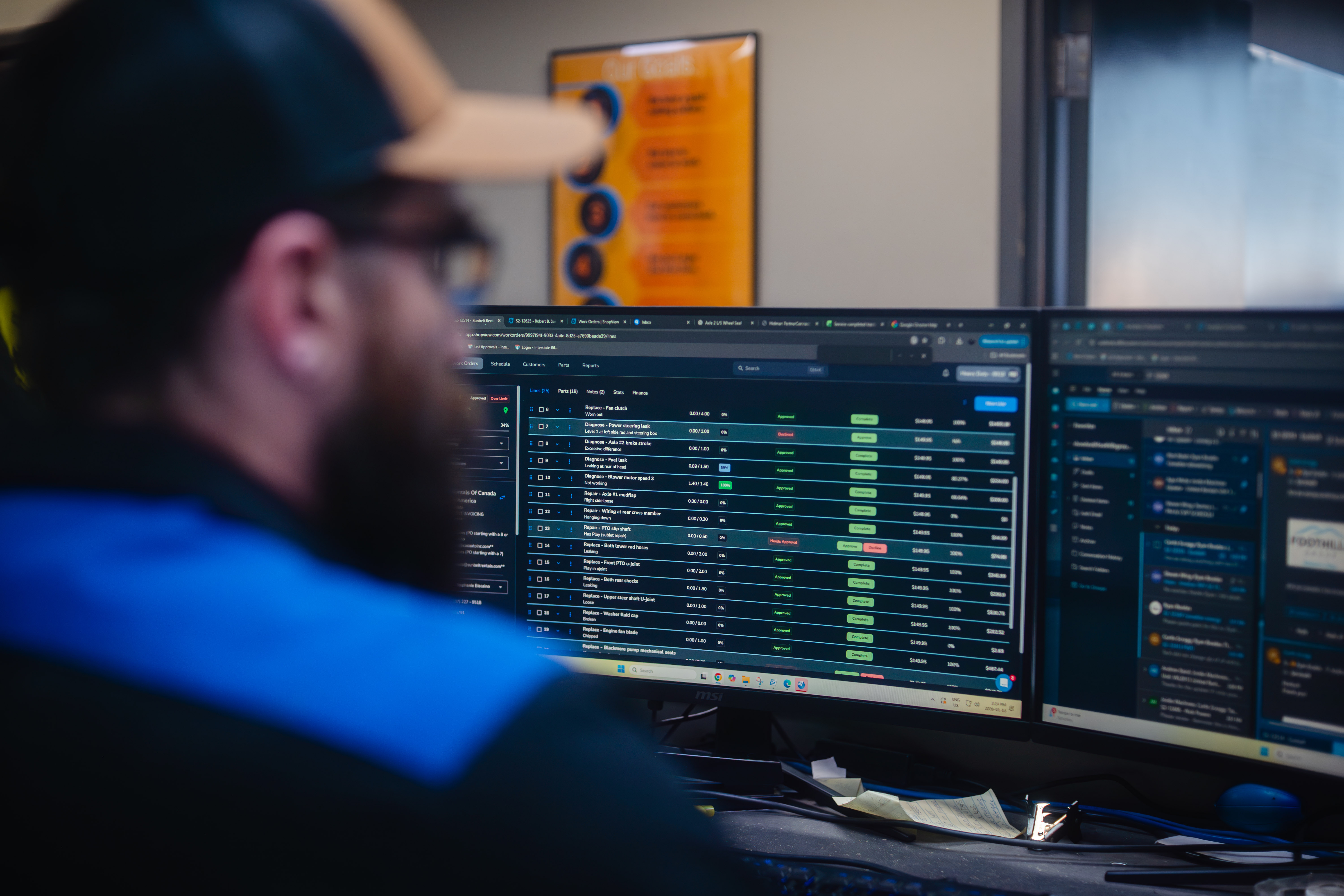
Fleet Maintenance Management Software
ShopView helps fleet operators and repair shops manage preventive maintenance, work orders, unit history, parts inventory, technician time, invoices, and reporting from one connected platform. Built for heavy-duty fleets, commercial vehicles, diesel repair shops, and truck repair teams that need to reduce downtime and keep assets on the road.
Start Free TrialMaximize Fleet Uptime
ShopView gives your team the tools to stay ahead of repairs, track service history, and keep every fleet unit moving through maintenance without losing visibility.
Preventive Maintenance Tracking
Schedule recurring service by mileage, engine hours, date, or unit type so your team knows what is due before a breakdown happens.
Unit-Level Service History
Track every repair, inspection, part, note, invoice, and technician update against the right truck, trailer, or piece of equipment.
Real-Time Maintenance Visibility
See what is scheduled, what is in progress, what is waiting on parts, and what is ready to invoice across your fleet maintenance workflow.
Proactive Scheduling
Stay ahead of preventive maintenance with scheduling tools built for fleets and commercial repair operations. ShopView helps your team track mileage, engine hours, inspection intervals, and recurring service needs so work can be planned before assets go down.
With better scheduling, fleet managers and service teams can reduce emergency repairs, balance technician workload, and keep trucks, trailers, and equipment available when customers or crews need them.
Learn More About Our Work Order Features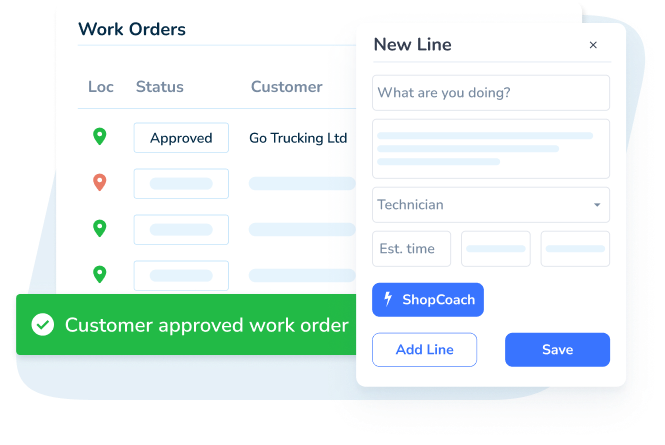
Inventory and Procurement Management
Fleet maintenance depends on having the right parts available when service is due. ShopView helps your team monitor parts usage, manage stock levels, track purchasing needs, and connect inventory directly to work orders.
From common PM parts to critical truck, trailer, and equipment components, ShopView gives teams better visibility into what is on hand, what is being used, and what needs to be reordered.
Track Usage Patterns
Monitor parts usage across units, work orders, technicians, locations, and fleet maintenance categories.
Forecast Needs
Use maintenance history and parts data to plan inventory before stockouts delay repairs.
Reduce Rush Order Expenses
Avoid unnecessary emergency orders by keeping critical parts available for scheduled and unscheduled work.
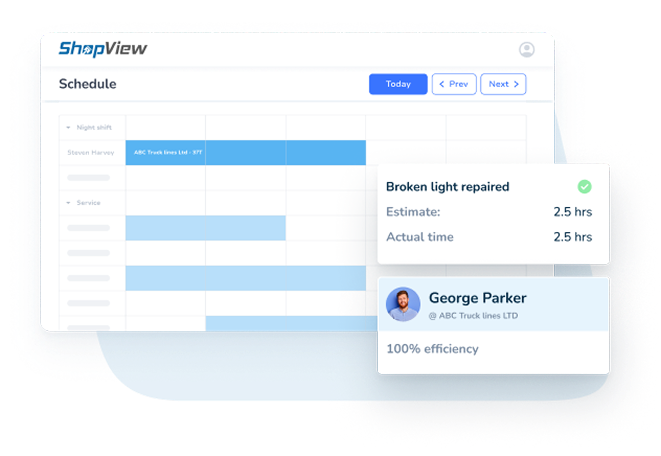
Boost Technician Efficiency by 20%
ShopView helps technicians spend less time on paperwork and more time completing fleet maintenance work. Technicians can access assigned work orders, view unit history, add notes, track labor, and update job status from the shop or the field.
Service managers get real-time visibility into technician workload, job progress, and bottlenecks so they can keep work moving without constant back-and-forth.
Learn More About Our Uptime SolutionsStreamline Fleet Maintenance Reporting
ShopView gives fleet managers and shop owners the reporting they need to understand costs, performance, and maintenance activity across every unit.
Total Cost of Ownership
Track repair history, parts usage, labor, invoices, and recurring maintenance costs by unit.
Run Batch Reports
Generate reports across units, technicians, repair types, time periods, customers, or locations.
Analyze Technician Statistics
Review technician time, productivity, job completion, and labor efficiency with clear reporting.
Improve Fleet Safety and Compliance
Stay organized with maintenance records, inspection tracking, service history, and documentation that help your team keep fleet units safe and road-ready.
Automated Regulatory Compliance
Track inspections, service records, and maintenance documentation to support DOT and safety requirements.
Proactive Maintenance Protocols
Create repeatable preventive maintenance workflows that reduce missed service and unexpected downtime.
Detailed Maintenance Reports
Keep maintenance activity, repair notes, inspection history, and unit records easy to find when needed.
Built By Heavy-Duty Shop Owners Who Know the Grind
ShopView was built by people who understand the pressure of keeping trucks, trailers, equipment, and commercial vehicles moving. Fleet maintenance teams deal with downtime, service intervals, technician scheduling, parts delays, repair documentation, and customer expectations every day.
That is why ShopView is built around the way heavy-duty repair shops and fleet teams actually operate. Your team gets one place to manage preventive maintenance, work orders, technician time, parts inventory, service history, invoicing, and reporting without adding more complexity.
"ShopView made our shops more productive and efficient — and it will do the same for yours."
See How ShopView Helps Heavy-Duty ShopsWhy Choose ShopView?
Available on All Devices
Access ShopView from desktop, tablet, or mobile so your team can manage fleet maintenance from the office, the shop, the field, or the road.
Seamless Integration
Connect ShopView with accounting, payment, and business systems, including QuickBooks, IBS, and other tools your operation already uses.
Comprehensive Support
Get onboarding and ongoing support from a team that understands heavy-duty repair, commercial fleet maintenance, and real shop workflows.
Fleet Maintenance Management Software: Keep Your Fleet on the Road
Fleet maintenance is more than fixing vehicles when they break. For fleet operators and repair shops, profitability depends on staying ahead of preventive maintenance, tracking unit history, controlling parts costs, scheduling technicians, and keeping every asset available for work.
ShopView gives teams a connected fleet maintenance software platform for managing service schedules, work orders, parts, labor, invoices, reporting, and compliance documentation without relying on paper checklists or disconnected systems.
Why Fleet Maintenance Matters More Than Ever
When a truck, trailer, or piece of heavy equipment is down, it is not producing revenue. Downtime creates missed work, delayed deliveries, emergency repair costs, frustrated drivers, and pressure on maintenance teams.
Modern fleets are also more complex. Many operations manage a mix of tractors, trailers, service trucks, construction equipment, agriculture equipment, and commercial vehicles with different service intervals, parts needs, inspection requirements, and repair histories.
Fleet preventive maintenance software helps teams plan service before failures happen. Instead of reacting to breakdowns, fleet managers and repair shops can track what each unit needs, when it is due, who is assigned, and what parts are required.
What Is Fleet Maintenance Management Software?
Fleet maintenance management software is a system for managing the work required to keep trucks, trailers, equipment, and commercial vehicles safe, compliant, and road-ready.
A strong fleet service management software platform helps teams:
- Track every fleet unit and its service history
- Schedule preventive maintenance by mileage, hours, date, or interval
- Create and manage fleet work orders
- Assign technicians and track labor time
- Manage parts inventory and purchasing
- Store inspection and compliance records
- Track invoices, costs, and repair history by unit
- Report on downtime, maintenance cost, technician productivity, and fleet performance
For repair shops, fleet maintenance software also supports customer-facing fleet work by keeping unit history, approvals, parts, labor, and billing connected.
Common Pain Points in Fleet Maintenance
Fleet maintenance gets difficult when service data, work orders, parts, and schedules live in different places.
Unplanned Downtime - Without proactive maintenance tracking, small issues can turn into breakdowns that pull trucks, trailers, or equipment out of service.
Complex Scheduling - Different assets need service at different intervals. Spreadsheets make it hard to track PMs, inspections, mileage, engine hours, technician availability, and repair deadlines.
Disconnected Unit History - When service history is scattered across paper, emails, and separate systems, teams lose visibility into what has been done and what needs attention next.
Parts and Procurement Issues - Poor parts visibility leads to stockouts, rush orders, overbuying, and jobs waiting longer than necessary.
Missed Labor and Billing - If technician time, parts, and repair notes are not tied directly to work orders, shops can miss revenue and delay invoicing.
Compliance Risk - Fleet teams need accurate records for inspections, maintenance activity, safety checks, and regulatory documentation.
Key Features to Look For
The best fleet maintenance software should support the full workflow from scheduled service to completed invoice.
- Asset and Unit Tracking - Track trucks, trailers, equipment, VINs, unit numbers, warranty details, service history, inspection records, and maintenance costs.
- Preventive Maintenance Scheduling - Create recurring PM schedules based on mileage, engine hours, dates, or custom intervals.
- Fleet Work Order Software - Create, assign, track, and complete work orders with labor, parts, notes, photos, approvals, and service details in one place.
- Technician Time Tracking - Record technician labor by job or task so your team can understand productivity and capture billable time accurately.
- Parts Inventory Management - Track parts usage, reorder points, purchasing needs, and job-level parts costs across locations and units.
- Reporting and Analytics - Monitor downtime, cost by unit, PM compliance, labor efficiency, parts usage, invoices, and shop performance.
- Mobile Access - Give technicians and managers access to work orders, unit history, schedules, and updates from desktop, tablet, or phone.
- Integrations - Connect accounting, payment, telematics, fuel, supplier, and business systems to reduce duplicate entry.
Benefits of Fleet Maintenance Software
A connected fleet maintenance tracking software platform helps teams reduce chaos, improve uptime, and make better decisions.
Key benefits include:
- Fewer unexpected breakdowns
- Better preventive maintenance compliance
- Faster work order creation and completion
- More accurate technician time tracking
- Stronger parts inventory control
- Better unit-level service tracking
- Cleaner compliance documentation
- Faster invoicing and improved cash flow
- Clearer reporting on fleet costs and performance
For fleets and repair shops, the value comes from having one reliable place to see what is due, what is in progress, what was completed, what it cost, and what needs attention next.
How to Evaluate and Implement Fleet Maintenance Software
When comparing fleet maintenance management software, look for a system that supports heavy-duty workflows, commercial vehicles, and the way your team actually works.
The right platform should support:
- Heavy-duty trucks, trailers, commercial vehicles, and equipment
- Preventive maintenance scheduling
- Fleet work orders
- Unit-level service history
- Technician time tracking
- Parts inventory management
- Invoicing and payments
- Reporting and analytics
- Mobile access for technicians and managers
- Integrations with accounting and business systems
- Support from a team that understands repair operations
A good rollout starts with your current workflow. Map how service is requested, scheduled, completed, documented, and billed. Then clean up unit data, service intervals, technician lists, parts information, and customer records before moving more work into the system.
Start with a pilot group or a specific fleet category, then expand once your team is comfortable. Use reports to measure downtime, labor capture, invoice speed, parts usage, and PM compliance.
Conclusion: Keeping Your Fleet on the Road
Fleet maintenance is too important to manage with paper checklists, spreadsheets, and disconnected systems. ShopView brings preventive maintenance, fleet work orders, unit history, parts inventory, technician time tracking, invoicing, reporting, and compliance documentation into one platform.
Whether you operate a fleet, manage fleet maintenance for customers, or run a heavy-duty repair shop servicing commercial vehicles, ShopView helps your team reduce downtime, improve visibility, and keep assets moving.
Ready to Increase Your Shop's Revenue by 20%+?
Join fleet maintenance and heavy-duty repair teams using ShopView to streamline work orders, improve technician productivity, manage parts, reduce downtime, and grow revenue.